
Chemical energetics is one of the most important topics in chemistry for students at the Primary, Secondary, and JC levels in Singapore. It helps us understand how energy is transferred during chemical reactions—and why some reactions feel hot while others feel cold.
If you’ve ever searched for Chemistry Tuition this is one of the core topics students often need help mastering.
What is Chemical Energetics?
Chemical energetics is the study of energy changes during chemical reactions.
Every reaction involves:
- Breaking bonds (requires energy)
- Forming bonds (releases energy)
The overall energy change determines whether a reaction is:
- Exothermic (releases energy)
- Endothermic (absorbs energy)
Understanding Exothermic vs Endothermic reactions is essential for scoring well in school exams.
Exothermic Reactions (Energy Released)
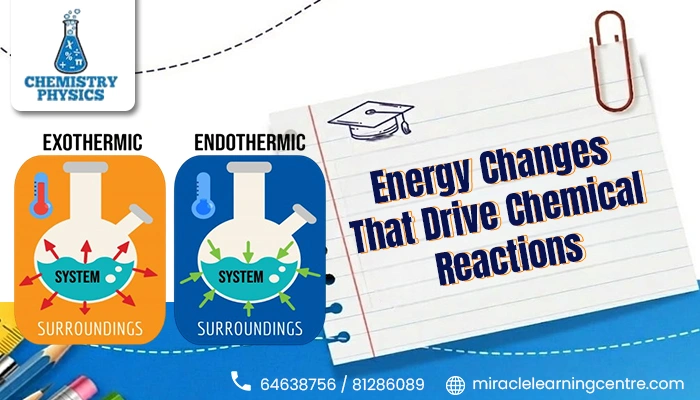
An exothermic reaction releases energy (usually heat or light) into the surroundings.
Key Features:
- Surroundings: Temperature increases (feels hot)
- Energy flow: From system → surroundings
- Enthalpy change (ΔH): Negative
- Energy levels: Reactants have more energy than products
Common Examples:
- Combustion (burning fuels)
- Respiration in living organisms
- Neutralisation (acid + alkali)
- Rusting of iron
Exam Tip: Exothermic = Energy OUT = ΔH is negative
Endothermic Reactions (Energy Absorbed)
An endothermic reaction absorbs energy from the surroundings.
Key Features:
- Surroundings: Temperature decreases (feels cold)
- Energy flow: From surroundings → system
- Enthalpy change (ΔH): Positive
- Energy levels: Products have more energy than reactants
Common Examples:
- Photosynthesis
- Thermal decomposition
- Instant cold packs (ammonium nitrate dissolving)
Exam Tip: Endothermic = Energy IN = ΔH is positive
Reaction Pathways & Energy Diagrams
Energy diagrams are frequently tested in exams and are key to understanding Exothermic vs Endothermic reactions.
What to Look For:
- Exothermic reactions: Start high → end low
- Endothermic reactions: Start low → end high
Activation Energy (Ea):
- The minimum energy required to start a reaction
- Represented as a “hump” on the graph
- Present in both types of reactions
Summary Comparison
| Feature | Exothermic Reaction | Endothermic Reaction |
| Heat Transfer | Releases heat | Absorbs heat |
| Temperature | Increases | Decreases |
| Enthalpy (ΔH) | Negative | Positive |
| Energy Profile | Reactants > Products | Reactants < Products |
| Feeling | Hot | Cold |
Why Students Need Help with This Topic
Many students struggle with:
- Confusing Exothermic vs Endothermic concepts
- Interpreting energy diagrams
- Remembering ΔH signs in exams
- Applying concepts to structured questions
That’s why many parents look for Chemistry Tuition to support their child’s learning.
Excel in Chemistry with Miracle Learning Centre
At Miracle Learning Centre (Singapore), we provide expert Chemistry Tuition and Science Tuition tailored for:
- Primary students building strong foundations
- Secondary students preparing for O-Levels
- JC students tackling advanced chemistry concepts
Why Choose Us?
- Clear, simplified explanations of tough topics
- Strong focus on exam techniques
- Small group classes for better attention
- Proven results and improved student confidence
If you’re searching for a tuition centre near me that truly helps students understand topics like Exothermic vs Endothermic, we’re here to help.
Get Started Today
Visit miraclelearningcentre.com to learn more about our programmes.
Give your child the advantage of expert guidance—and turn chemistry from confusing to confidence.